Beyond the Spreadsheet: Why Generic EHRs Fail Providers
Kibu Team

Beyond the Spreadsheet: Why Generic EHRs Fail Providers
If you have ever watched a Direct Support Professional click through six tabs to log a single note, you already know the feeling… The software was built for someone, but that someone was not your team.
Most IDD organizations we talk to are using software first made for a different kind of care - things like hospitals, doctors’ offices, behavioral health, etc. At some point, the vendor added an IDD module. The sales team added IDD to the website. The platform was suddenly called “IDD-ready.”
The unfortunate result is small, daily friction. ISP fields are squeezed into clinical templates. Day program notes are pushed through therapy session forms. Service codes that almost match what your state needs, but with a few work-arounds your team had to figure out on its own (with no help from the “customer service” team).
This post is about that gap you very well may be experiencing. Today, we’re covering why generalist EHRs miss the mark for IDD providers, why software built for the way IDD organizations works differently, and what to look for if you’re making a switch.
The Generalist Problem
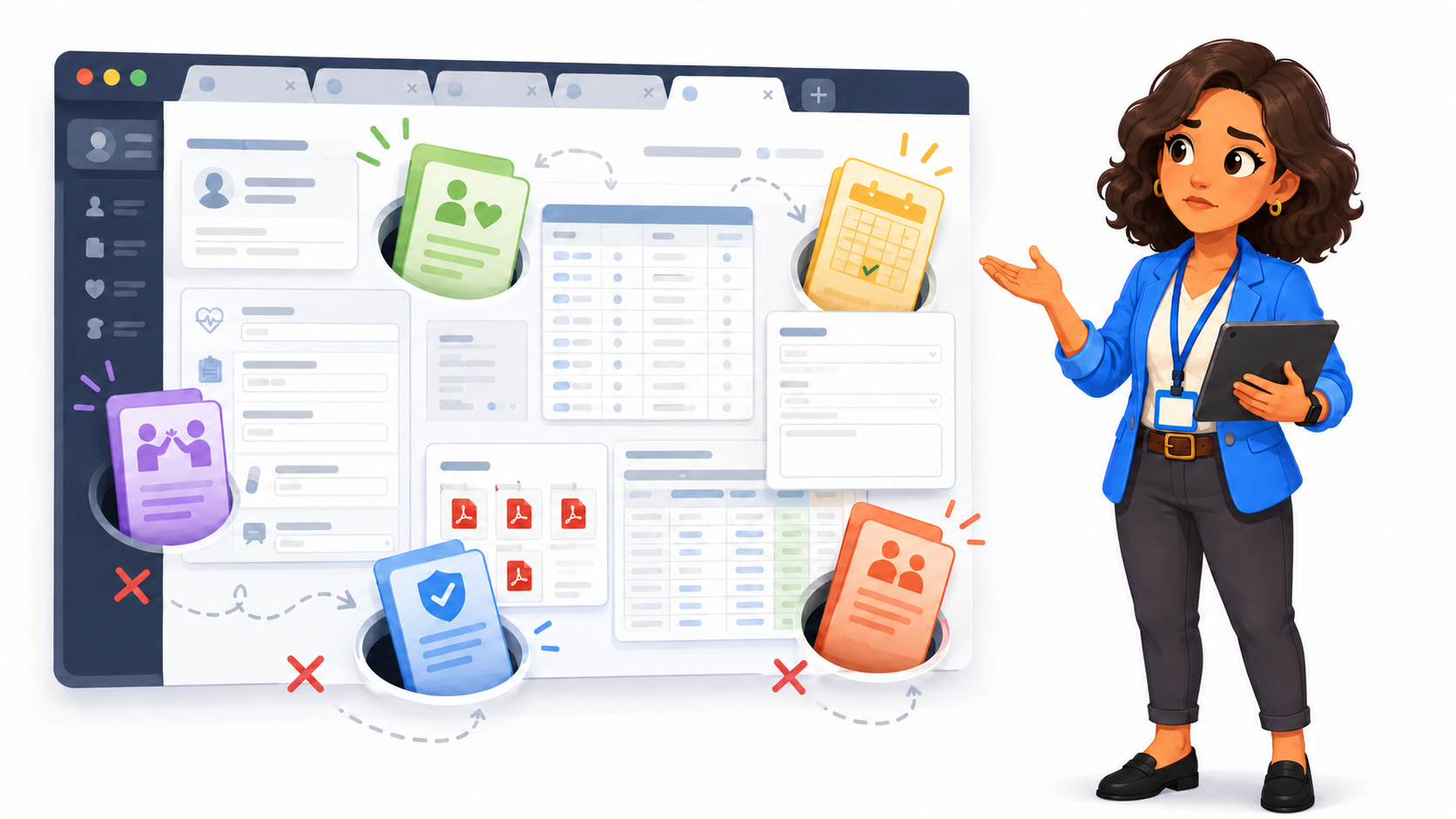
A generalist EHR is software first built for one kind of care, then stretched to fit another. For IDD providers, that usually means a system made for hospitals, doctor offices, or behavioral health practices that someone tried to extend to day programs, group homes, or supported employment. The fit looks fine on a screenshot or in a conference booth. The trouble shows up in the workflow and in staff satisfaction.
IDD service delivery does not look like a fifty minute therapy session. It does not look like a hospital admission. What it does look like is a long shift across (typically) more than one setting, with notes tied to person-centered plans, ISP goals, community hours, and behavior support plans. What a DSP needs to write down in a day is different in shape, in how often it happens, and in why it matters. A general-purpose EHR was not built for that kind of work.
When a general-purpose system tries to cover IDD services, the seams show fast. Goal tracking gets squeezed into therapy outcome fields. ISPs end up uploaded as PDFs because the system has no real spot for them. State waiver rules get handled with custom forms your team has to build and keep updated. Day program attendance lives on a screen made for clinic visits.
Each work-around is a small tax. Spread it across hundreds of shifts a week, dozens of staff, and several state reports, and the tax adds up. The Kibu team has heard from IDD leaders across the country who say their DSPs spend two to three hours a shift on paperwork. That is the price of using the wrong tool for the job.
What Generalist Software Actually Costs Your Team
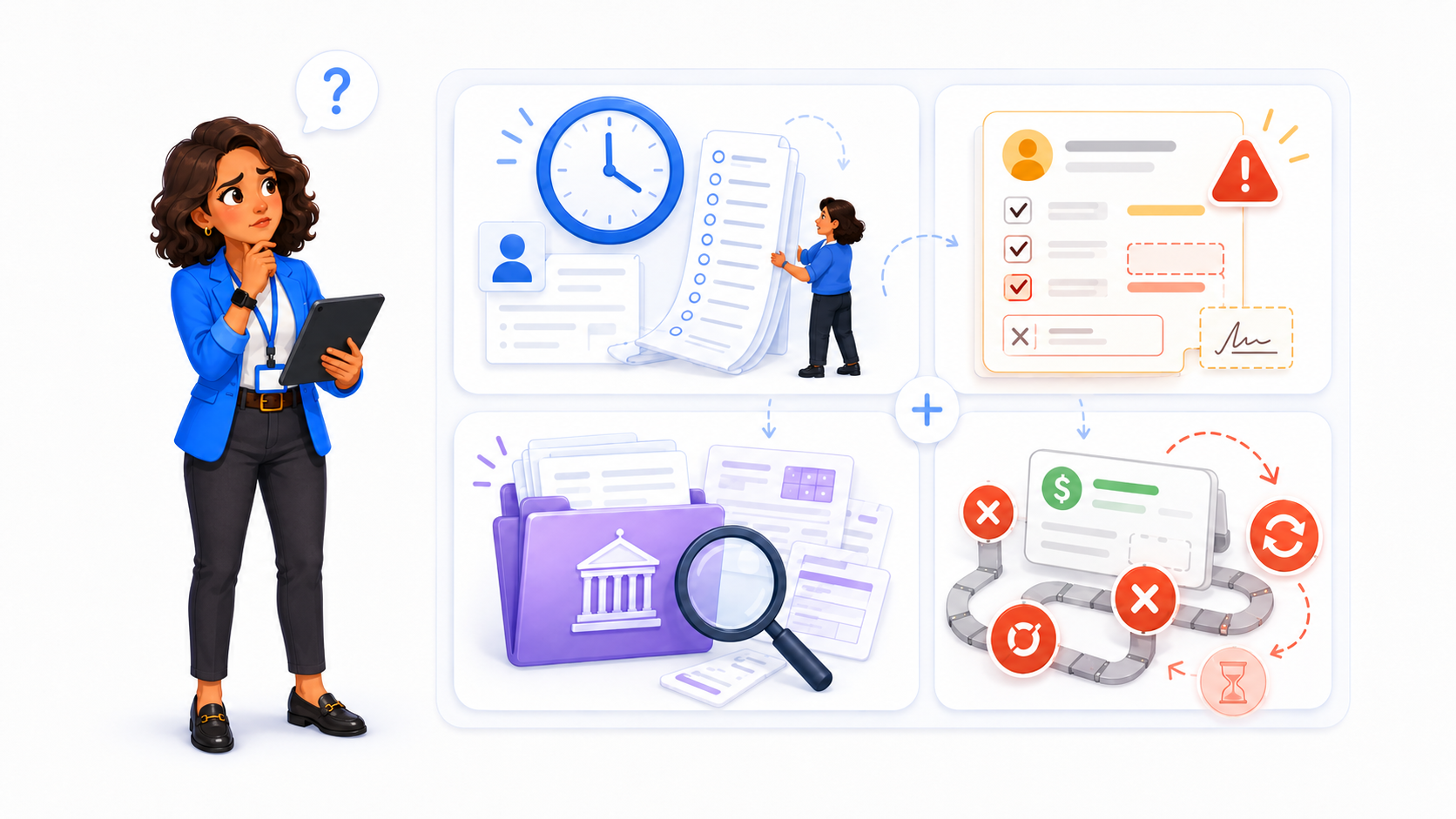
The hidden costs of a generalist EHR show up in four spots: DSP time, note accuracy, audit readiness, and clean claims. Each piece looks small on its own, but together, they squeeze your budget, your staff, and the care you can deliver.
DSP time is the most visible cost
When the system was made for a different kind of care, every note takes longer. Fields do not match what your team is recording. Workflows assume a clinical setting that does not apply to your organization or your members. DSPs end up logging notes after their shift, because the software was never built for in-the-moment capture. The average IDD provider runs a 45% turnover rate among DSPs. Paperwork hassle (AKA administrative burnout) is frequently cited as one of the reasons people leave.
Accuracy is the next-highest cost
When staff are working around the software instead of with it, mistakes pile up. Notes land in the wrong field. Required signatures get missed. Service codes get logged in different ways by different people. The data leaders need for outcome reports drifts away from what really happened in the field - and that incurs risk for your whole organization.
Audit readiness suffers when the system does not speak your state’s language
HCBS waiver rules vary from state to state. A general-purpose system handles those differences with custom forms and fields that providers are often tasked to build. Those setups break easily. When the state updates its rules, your team is back in the form builder.
Clean claims get squeezed too
Systems that were never built for IDD services do not have the safety checks a purpose-built tool runs before a claim leaves the building. The result is more denials, more re-do work, and a slower path to revenue you have already earned. Even a small share of clawbacks across a year of waiver billing adds up to real money. That hurts even more when margins are already tighter than ever before.
What an EHR Built for IDD Looks Like
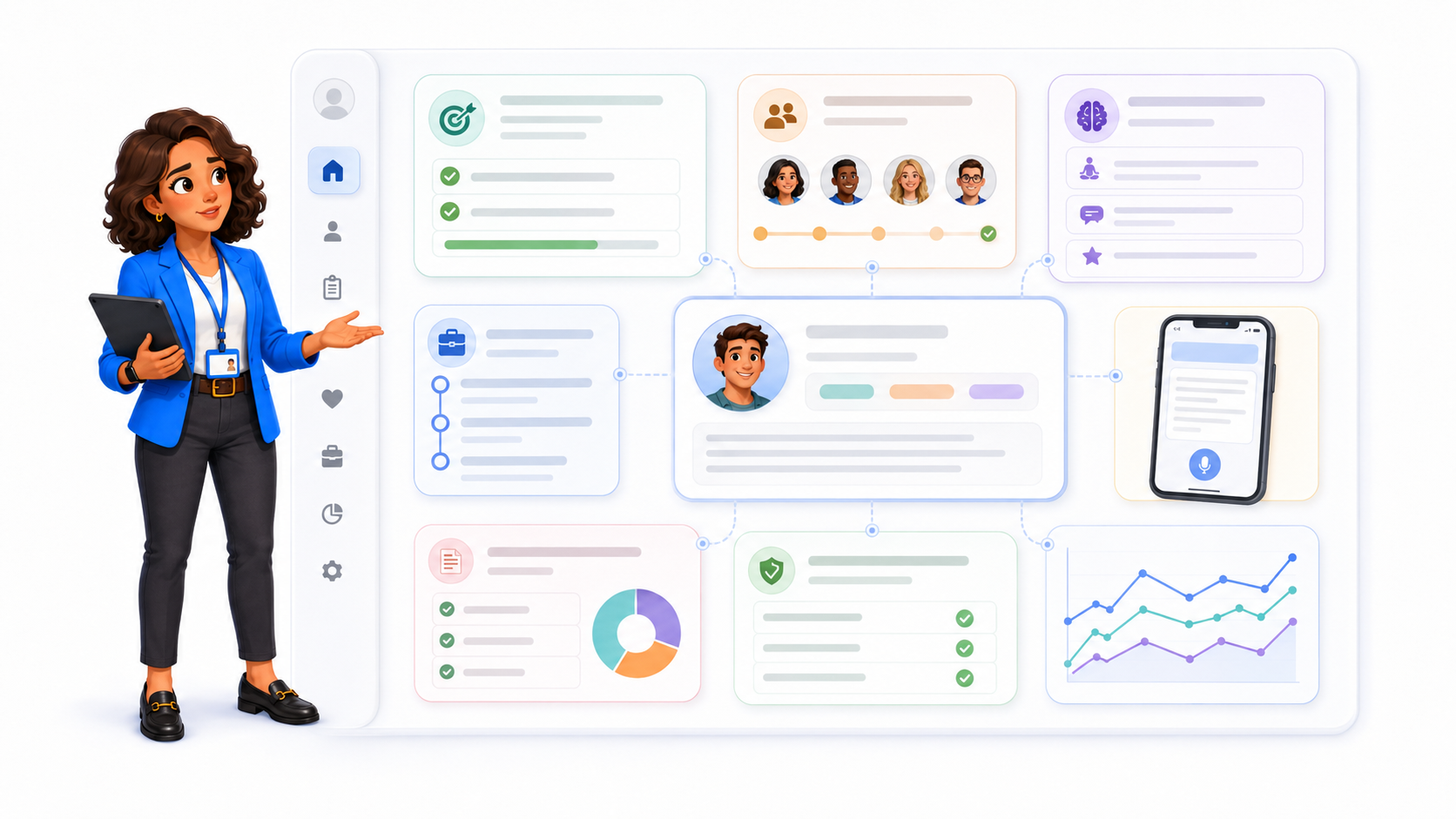
An EHR built for IDD is software made from day one for the way IDD organizations deliver services. The fields, the language, the workflows, and the reports all assume HCBS waiver work, person-centered planning, and the reality of supporting people across day, residential, and employment programs.
The differences start with how the data is set up. Person-centered plans live inside the system as first-class items, instead of PDFs uploaded somewhere in the ether. Goals, community hours, behavior support strategies, and employment milestones sit where DSPs and managers actually use them. State waiver setups are baked in from the start.
The workflows follow how the work happens. A DSP can write a note in a few seconds during a shift, on a phone, in the language they speak. A program manager can pull a state-ready audit report without exporting to a spreadsheet and rebuilding it. An Executive Director can look at outcomes and see goal progress next to billing.
Compliance is stronger by default. When a system is built around IDD rules, it can run quality checks on claims and billing before anything goes out the door. That means fewer clawbacks, fewer denials, and less time chasing redo work. State updates get handled by the vendor, not by your team in a form builder at 9pm.
The reports tell a story you can use. Outcome evidence when you need it. Trends across programs. Numbers you can take into a rate conversation, an audit, or a board meeting with confidence.
An EHR built for IDD makes the software a partner in the work. A generalist EHR makes the software one more thing your team has to manage on top of everything else.
How it Plays Out, Day-To-Day

Let’s look at three quick examples to make the difference a little more real. The work itself is the same in each story, but the friction is what changes:
A DSP writing a behavior support note
In a generalist system, the DSP opens the clinical note template, picks the closest available field, types a story in a free-text box, and remembers to tag the strategy from a list the QA team keeps updated (if you have one). In a system built for IDD, the DSP speaks the note into a phone, the system tags the strategy from the active behavior support plan on its own, and the note files against the right goal in seconds.
A program manager pulling a state audit report
In a generalist system, the manager exports raw data to a spreadsheet, checks it against the state’s documentation list, and rebuilds the report in a format the state will take. In a system built for IDD, the manager picks the report template for their state and sends the file out the same day. Easy and simple.
An Executive Director getting ready for a rate conversation
In a generalist system, the Executive Director asks the data team for outcomes and waits days for a custom pull. In a system built for IDD, the Executive Director runs the report directly and walks into the meeting with current numbers on goal progress, community hours, and employment outcomes.
These are the small differences that add up. A team that works with its software spends its energy on members. A team that works around its software spends its energy on the software.
Where Kibu Fits

Kibu was built from day one for IDD providers. Every workflow, every field, every report was designed around how day programs, group homes, supported employment, and habilitation actually run.
Our platform brings documentation, lesson planning, note-taking, progress tracking, and smart reports into one place. Person-centered plans are where our content team’s passion lives. State compliance is baked in across documentation. Quality checks on claims and billing are part of the workflow. That is why our partners average over 99% compliance within two months of going live with Kibu documentation. Providers who switched to Kibu have cut documentation time by 63%.
More than 350 IDD organizations across 46 states use Kibu every single day. That includes single-site day programs, multi-state residential providers, and everything in between. These are providers who made a choice to stop working around their software and start working with a tool made for the work they actually do.
If you’re thinking about a switch from a general-purpose EHR, or starting your first software conversation after years on pen and paper, we would be glad to walk you through what an IDD-specific platform looks like in practice.
Frequently Asked Questions
What is the difference between an EHR and an IDD-specific platform?
A general EHR is software made for medical or behavioral health practices. An IDD-specific platform is built around how IDD providers deliver services. That includes HCBS waiver documentation, person-centered planning, day program and residential workflows, and the rules of state Medicaid programs. Both are software. They are made for different jobs.
Why can’t I just set up a generic EHR for IDD services?
You can set up a generic EHR to handle IDD documentation, and many organizations do. The catch is that every work-around creates ongoing upkeep, brittle reports, and friction for DSPs. Setup costs do not show up on a contract. They show up in DSP time, audit prep, and claim accuracy over the life of the platform.
What features should I look for in an IDD-specific EHR?
Look for native person-centered plans, state-specific HCBS waiver support, mobile note capture in many languages, quality checks built into the claims workflow, and reports that give you audit-ready exports without a spreadsheet rebuild. Ask the vendor how many IDD providers they serve and in how many states.
Is switching from a generic EHR disruptive?
It does not have to be. A good rollout includes data migration, staff training, and a go-live date everyone has prepared for. Most Kibu customers are fully live within two months. Smaller single-program organizations have gone live in as little as one month.
How does an IDD-specific EHR affect compliance and audits?
When the system is built around IDD rules, compliance moves from a manual review to a built-in workflow. State report templates, structured outcome tracking, and quality checks before billing all lighten the QA load and improve the consistency of what gets sent in.
How long does it take to switch from a legacy EHR to a platform built for IDD?
For most IDD organizations, the full rollout runs about two months. Smaller single-program organizations can go live in as little as one month. Larger multi-program providers with several service types may need more runway. The two big drivers are the size of the data migration and how engaged your leadership team is in bringing staff along.